

At Healing for Gaza, our clinicians and interpreters come from diverse countries, cultures, and lived experiences — yet they are united by a shared commitment to show up for our patients from Gaza with both compassion and professionalism.
To meet the overwhelming need, our clinical team includes non-Arabic-speaking psychologists who work with medical interpreters to deliver trauma therapy. Approximately 30% of our sessions involve bilingual interpretation to ensure patients can speak and be understood in their mother tongue. But our interpreters do more than translate words — they help create and hold a safe space where children and adults can share their stories of loss, fear, and perseverance. Without them, the healing our practitioners offer would simply not be possible.
In this post, three of our dedicated volunteer interpreters — Abeer Fakhreddine, a Palestinian from Jordan; Christine Goussous, also from Jordan; and Saleh Fahed, a Palestinian from Lebanon now based in England — reflect on what drew them to this work and what it means to hold space for healing through language.
Q: What motivated you to volunteer as an interpreter, and how did you start working with Healing for Gaza?
Abeer: I was eager to do whatever I could to support the people of Gaza — and Palestine more broadly. With a background in psychology and healing, and as a holistic healer, I initially thought I could contribute in that area. I completed the questionnaire and applied as a clinician, but it turned out that I was a better fit for the interpreter role.
Christine: I was born and raised in Jordan, but many of my closest friends are of Palestinian origin. Witnessing their pain — and realizing I could help, even just through interpretation — I couldn’t say no. Like many, I watched the genocide in Gaza unfold online and heard firsthand stories from friends. The news kept getting heavier, and from where I was in Jordan, I felt powerless. People were donating eSIM cards, which was helpful, but I wanted to do more.
When I came across the Healing for Gaza initiative and saw they were seeking volunteers, it felt like the right opportunity to contribute. It’s truly been a privilege to support patients on their healing journeys.
Saleh: As a Palestinian myself, I feel deeply connected to the cause. I’m a refugee from Lebanon and lived through the 2006 war with my family, so I understand what it means to experience conflict — though I know that was only a fraction of what people in Gaza are enduring today. I now live in London, and many of my friends are from Gaza. I witness their suffering up close. My wife and I wanted to do more than donate, boycott, or protest. So, we both volunteered to support through interpretation.
It is a moral obligation for us to help people who are enduring a genocide, wherever we can — and this is just one avenue where we can. So I thought, ‘I have to do this.’
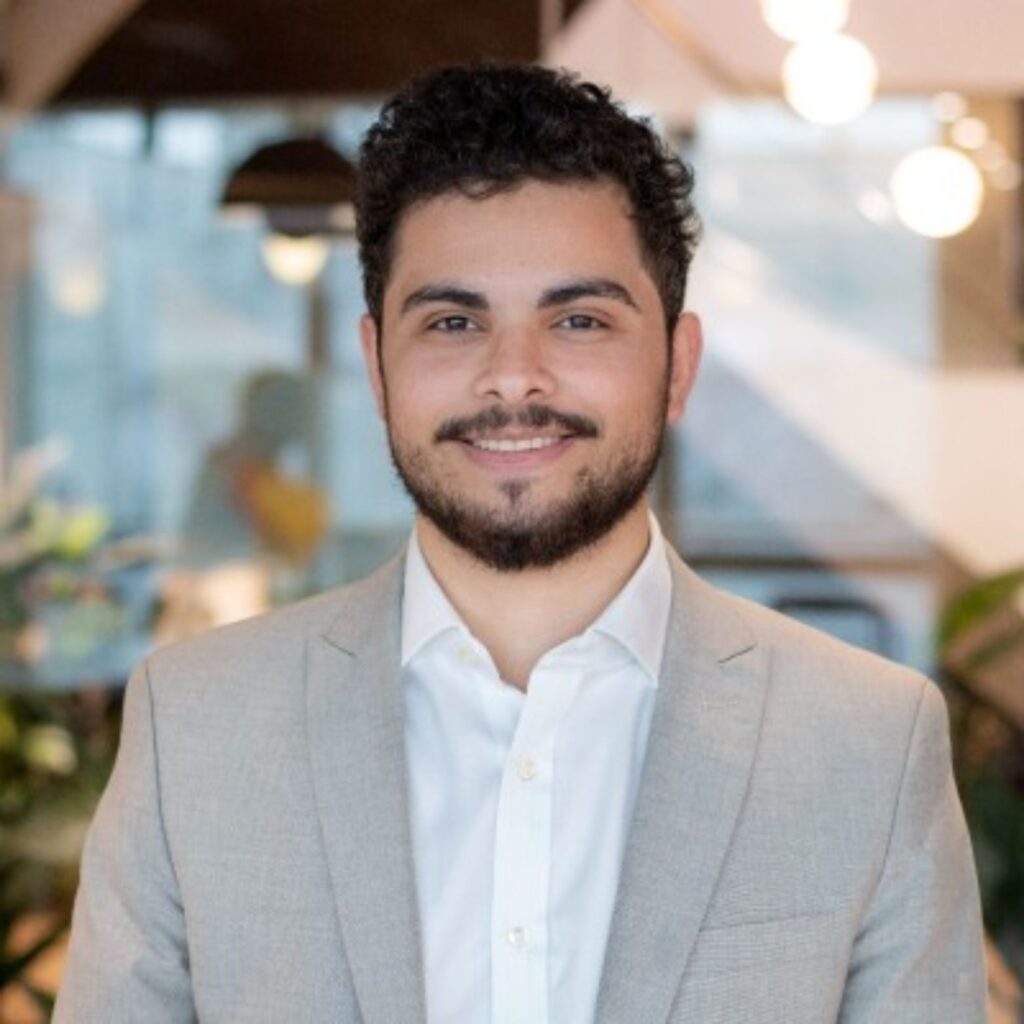
“It is a moral obligation for us to help [Gaza] wherever we can — and [interpreting therapy sessions] is just one avenue where we can.”
— Saleh Fahed
At Healing for Gaza, we do not recruit professional Arabic-English interpreters. Rather, we seek bilingual team members who bring empathy, a strong commitment to the Palestinian people and to mental health, and the ability to maintain professional boundaries, including their own emotional regulation and strict adherence to patient privacy and confidentiality.
Q: Have you worked as an interpreter before?
Saleh: A few years ago, I did professional written translation part-time for a short period, but this is my first time doing interpretation.
Christine: Whether at the dinner table with guests from abroad, in work-related Zoom meetings, or while traveling, I often found myself translating informally — but it was never something I did in a professional capacity.
Abeer: I initially thought I wouldn’t be able to do it, since I had no prior experience. But after the Zoom trainings, we were well-prepared to support patients online.

Online training of Healing for Gaza’s newest cohort of interpreters from Australia
At Healing for Gaza, interpreters are not merely language conduits. By holding the therapeutic space and relationship between patient and clinician, they play a vital role in building trust, preserving meaning, and fostering a sense of emotional safety during sessions.
Before joining psychotherapy sessions, every volunteer interpreter undergoes in-depth training. This preparation goes beyond technical and ethical interpretation skills — it also equips them to navigate the cultural, emotional, and political realities our patients face, including displacement, grief, and ongoing violence.
Q: Can you speak about the training process that prepared you to join patients in their sessions?
Saleh: The training process was quite rigorous, and I was genuinely impressed by how thoughtfully it was designed. The first couple of sessions focused on providing historical context about Gaza, followed by extensive role-playing exercises, which I found incredibly useful. We also received clear guidance on how to engage ethically with both patients and clinicians. The role-plays, in particular, stood out — they were extremely effective. Aya and Alexandra, our co-trainers (Clinic Coordinator and Executive Director), were masterful in their roles. I truly felt the training prepared us on both a technical and emotional level.
I remember one session vividly: Alexandra role-played a 10-year-old girl from Gaza and began to cry during the exercise. I nearly cried myself. That kind of experience prepares you for what’s ahead, because some of the real sessions can be deeply emotional.
For instance, one of the patients I work with lost his mother. Another missed two sessions in a row because, on both days, Israel had killed the families of two of his friends. I could already sense that our next session would be emotionally heavy. All I can hope for is that we do a good job. “Happy” might not be the right word for this work, because it’s born from such painful circumstances — but I’m grateful for the opportunity, and I do feel fulfilled being a part of this.
Christine: The role-plays immersed us in intense scenarios to prepare us for what was ahead — and I genuinely appreciated that approach to training. Now, I’m supporting the training of the fourth cohort of interpreters, which has been an interesting shift. Sitting on the other side, without having to interpret in real time, offers a new perspective.
That said, no matter how thorough the training is, nothing fully prepares you for those first few sessions. Each patient is different, and the emotional weight can be unpredictable. But over time, you begin to build a relationship — not just with the patient, but also with the clinician — and that connection becomes a foundation for the work.
Abeer: To be honest, I was terrified at first — it’s a huge responsibility. Accuracy is critical. You’re not just interpreting words; you’re conveying feelings, tones, even sounds. You almost have to become the person you’re interpreting for.
The Zoom trainings were incredibly thorough and well-structured. They helped a lot, but I still had doubts about whether I could do it. Now, I’m doing it with real confidence. I also joined Healing for Gaza’s third Field Mission, which was an incredible experience. Being face-to-face with patients and clinicians, having one-on-one interactions — that connection makes a world of difference. The moment you meet the patients, you feel even more committed.
It’s heavy work, emotionally, but at the same time, their strength is deeply inspiring. The resilience and faith they carry are beyond words. If they can endure and keep going, then the least we can do is stand with them and do our part.
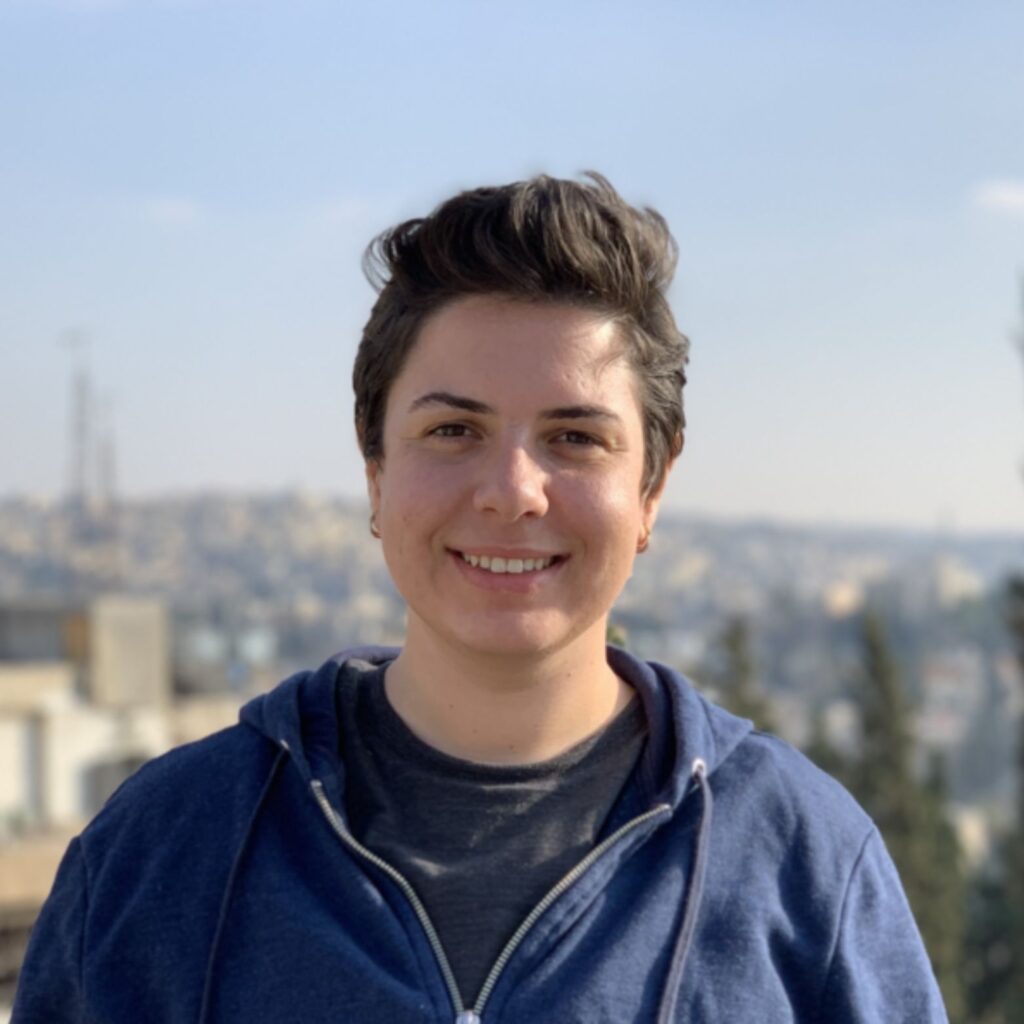
“Your job as an interpreter is not just to translate words — it’s to translate an entire culture behind those words.”
— Christine Goussous
For many patients, the presence of an interpreter who understands their language, culture, and faith is essential. Their presence fosters a sense of safety, familiarity, and dignity — conditions that are foundational to healing from trauma.
Q: Why is an interpreter important in an humanitarian setting beyond simply translating words?
Saleh: One important role interpreters play is providing context — whether by clarifying what the clinician says or offering historical or regional background that the clinician might not be familiar with.
Christine: I couldn’t agree more. Your job as an interpreter is not just to translate words — it’s to translate an entire culture behind those words. One of the patients I work with is in her final year of high school, which in countries like Jordan and Palestine is called tawjihi. That word carries a lot of emotional weight. The clinician didn’t initially grasp what was at stake if a student didn’t achieve a high score. In our context, not meeting a certain threshold — often 96 or 97 percent across all subjects — can close the door to fields like medicine.
The clinician understood the patient was under pressure, but once I explained the cultural significance of tawjihi, she gained a much clearer understanding of the intensity of that pressure. This is where our role as interpreters becomes vital: by offering cultural and contextual insight, we help deepen the clinician–patient relationship and ultimately enhance the therapeutic impact.
Christine often picks up on cultural nuances that I might overlook — differences between me and my therapist, whether related to religion or lifestyle. I feel that most interpreters simply translate words, but Christine conveys the full picture of what I want to express.
— Zahra*, 17 years old, Healing for Gaza Patient
Abeer: To be honest, I was quite skeptical at first. I had always imagined therapy as a one-on-one space between the clinician and the patient, and I worried that having an interpreter might feel intrusive. But I was completely wrong. I’ve come to see that having an interpreter in the session actually strengthens it — the three of us work together as a team, all focused on supporting the patient. Somehow, that dynamic makes the therapeutic space even stronger.
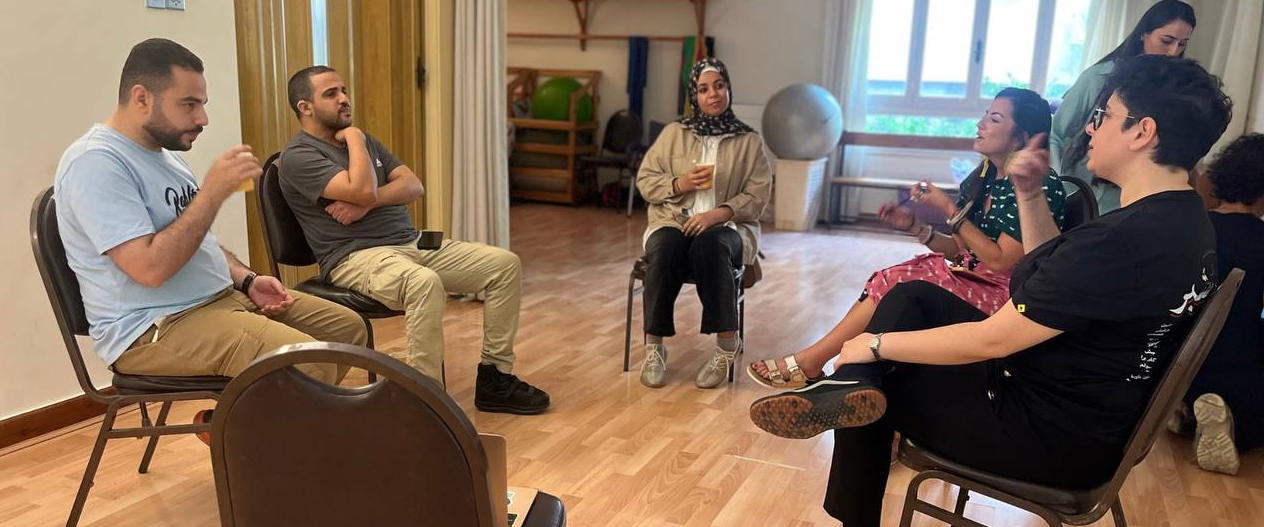
Christine interpreting for our frontliner patients — Palestinian journalists from Gaza —
during a focus group with guest Lauren Bohn
Q: Is there a particular patient story that highlights the impact of Healing for Gaza’s work?
Saleh: One of the patients I’ve been working with lost his mother during the genocide. I still remember our first session — there was a long, awkward silence. I would interpret everything the clinician said, and his only responses were, ‘Okay,’ or ‘Yeah.’ That was the whole hour. The clinician felt it wasn’t appropriate to mention his mother right away. Our first priority was to create a safe space where he could feel comfortable enough to open up.
It took time, but gradually he began to trust us. In one session, he shared, ‘Last week was tough because I just got my mum’s death certificate.’ It was heartbreaking. But simply helping him begin to explore and name his emotions allowed us to hold space for him in a meaningful way.
In recent sessions, he’s been relaxed enough to joke with us. He still carries a lot, but the change is clear — from someone emotionally shut down to someone who now shares how his week has been and even laughs. We haven’t fixed his life — of course, that’s not something we can do — but witnessing that transformation has been incredibly rewarding.
Abeer: We have a patient who speaks English well, but when emotions run high, she naturally switches to Arabic — her mother tongue. What I’ve realized is that even when a patient is fluent in English, my presence as an interpreter still matters. I’ve seen the difference. There’s a sense of safety they feel — knowing someone understands their culture, their faith, their language. Even the small, everyday phrases like insha’Allah or alhamdulillah carry meaning and comfort. Having an interpreter in the room helps ground them in a way that goes beyond just words.
We feel like a family — Abeer, my interpreter, and Maya, my therapist. There’s a strong sense of chemistry between us. The sessions feel comfortable and smooth, and I’m able to express myself freely. Abeer gives me the space and liberty to speak in my own words.
— Salma*, 39 years old, Healing for Gaza Patient
Q: What is your advice for someone who is on the fence about becoming an interpreter?
Christine: In humanitarian aid, the focus is often on material needs, while mental health is frequently overlooked. That’s why the work Healing for Gaza is doing — creating a space for patients to heal — is so powerful and deeply necessary. It’s been incredibly meaningful to be a part of someone’s healing journey. For many, that journey is long, because what they’ve experienced is beyond what anyone should ever have to endure. But knowing that you’re helping someone process, and offering a safe space even just to vent, has been truly special.
Abeer: I was really scared at first and thought, ‘Who am I to interpret?’ But with training, experience, and the support of the clinicians, it soon started to feel natural. The whole process turned out to be easier than I expected, and anytime you need help, there’s always someone ready to support you.
This work — it gives you hope in life. I would absolutely encourage others to join. Just do it. Everyone has the power to make a difference.
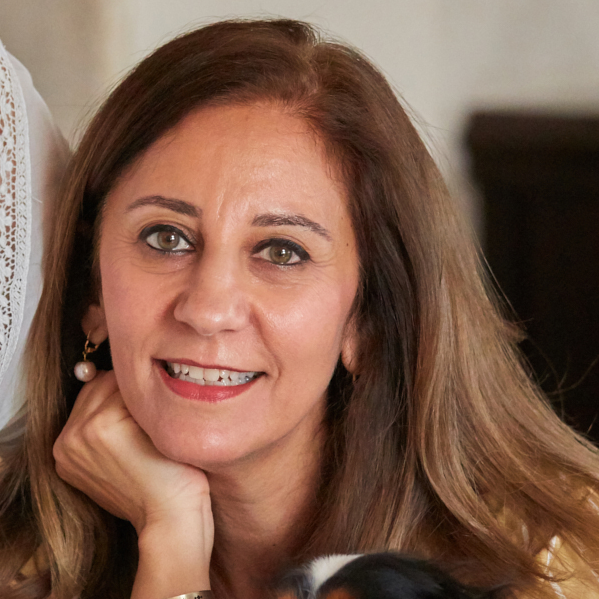
“Just do it. Everyone has the power to make a difference.”
— Abeer Fakhreddine
Editor’s Note: These interview transcripts have been edited for clarity and brevity. All patient anecdotes were shared with full consent, and identifying details have been modified, with *pseudonyms used where necessary to protect patient privacy.
_____
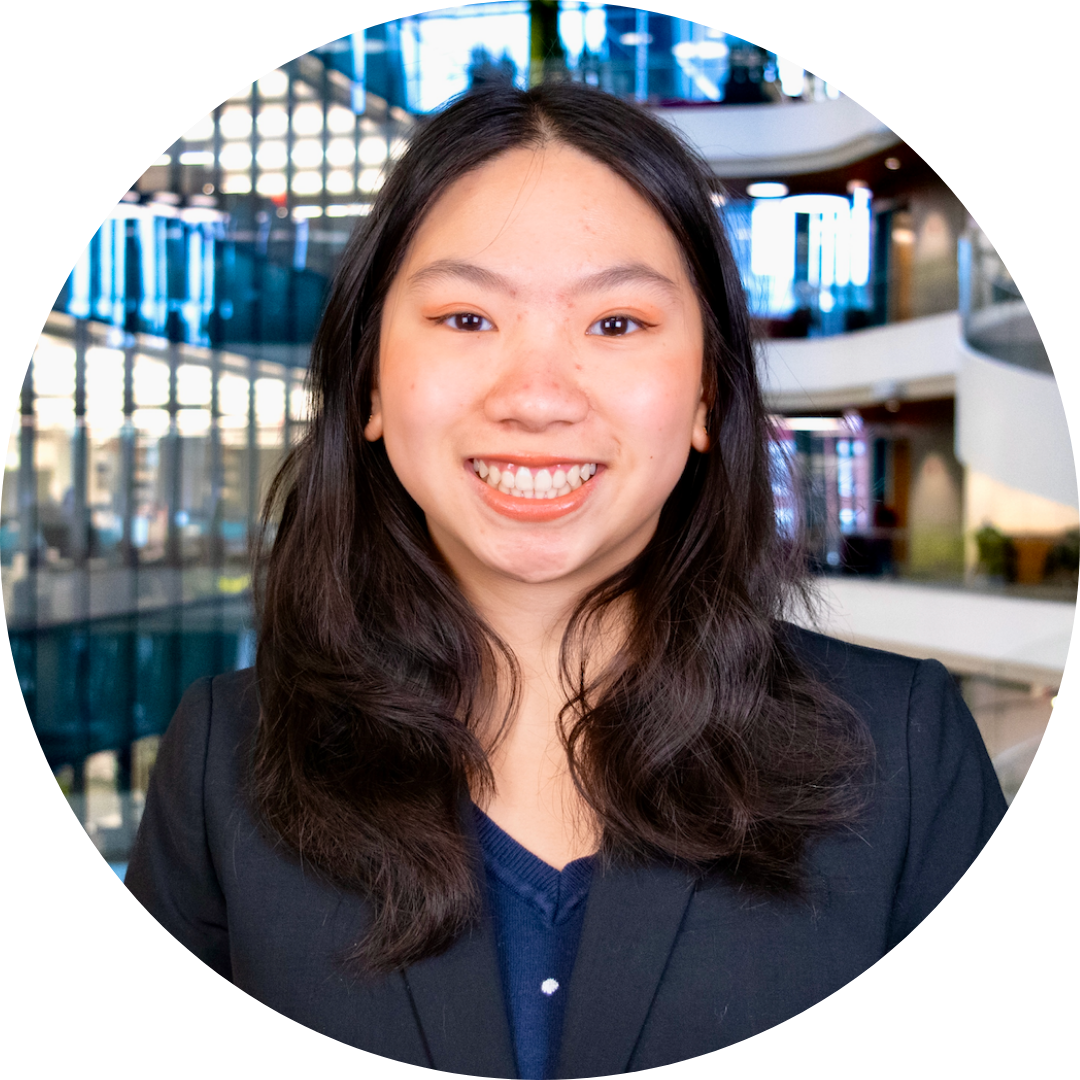
Heidi Ho is pursuing degrees in public health and journalism at Northeastern University. She is driven by a passion for social justice, health, and science. She previously worked with a non-profit organization in Ecuador and currently writes for multiple publications. Heidi currently serves as a communications intern with Healing for Gaza.