

At Healing for Gaza, we offer our patients options and agency when seeking therapy. In addition to talk therapy, we offer guided breathwork, somatic therapies, EMDR, art, music, and psychodance for people of all ages, abilities, and genders. To enable this work, we invite expert healers to teach and advise us.
Licia Sky is a renowned bodyworker, somatic educator and co-founder of the Trauma Research Foundation. With more than 25 years of experience working with individuals affected by trauma, she specialises in the use of breath and music to restore the body’s neurological responses.
In this month’s edition of the blog, we speak with Licia about movement as a modality for healing, the importance of finding joy within anger as a way to resist powerlessness, and her experiences and insights from working with HFG on the ground.
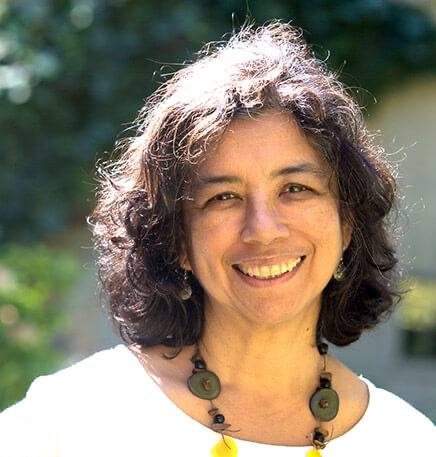
“Our capacity for joy and love is our human birthright. And when that’s taken away from us, that’s the worst impact of trauma.”
— Licia Sky
1. Breath and the Body as Channels for Healing
Trauma influences how we see ourselves and, in turn, shapes how we care for, treat, and love others. As Licia explains, trauma impacts our ability to live a healthy, well-meaning life. In certain circumstances, talk therapy is effective, but for many genocide survivors, speaking of their experiences can trigger a cascade reaction that negatively impacts the body.
Q: For those who are new to this space and the vocabulary of somatics — what do body-based interventions mean for trauma and healing?
Licia: Somatics is our understanding of our bodies and how they work. When we are in a safe situation, we have the space to choose how to react. But when we are in danger, our processing is cut short and we don’t have time to choose how we are going to react. We run, fight, collapse, and/or go unconscious, because sometimes that’s the only way to not feel overwhelming pain.
When we experience trauma, our bodies can become accustomed to reacting instead of responding. It disrupts our ability to think clearly about ourselves, take care of each other, and lead a healthy, happy life. Our bodies also suffer a physical toll, such as inflammation, inability to sleep, disrupted digestion, and more. It’s as if you were trying to drive a car that was in park and revved the gas pedal repeatedly.
Q: How is breathwork related to healing trauma?
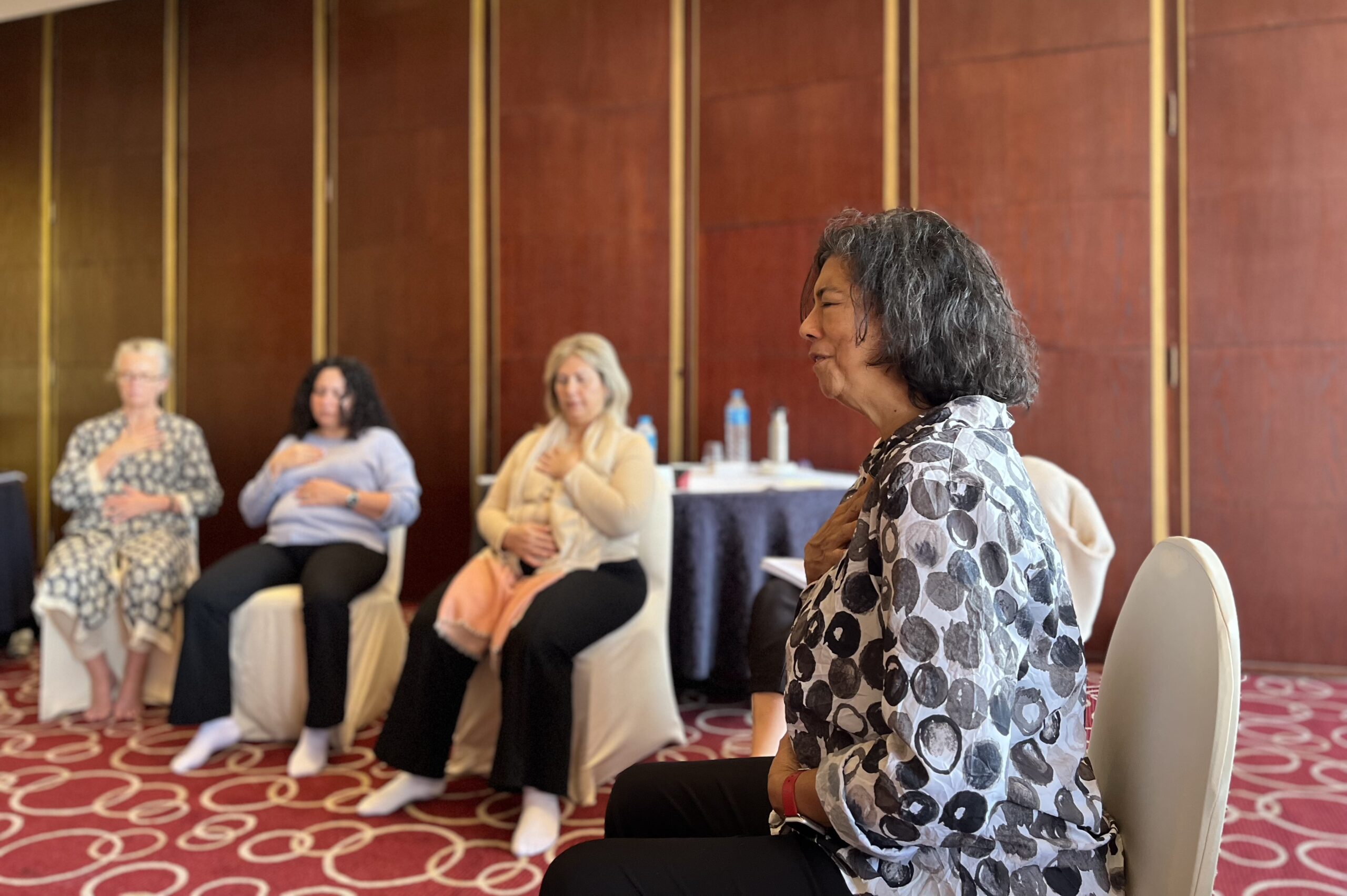
Licia: The way you breathe reflects your dignity: to be able to draw in a full, deep breath because your body deserves to breathe. Our breath is our ultimate moment to moment permission to exist. It’s a sacred thing.
“The way you breathe reflects your dignity: to be able to draw in a full, deep breath because your body deserves to breathe. Our breath is our ultimate moment to moment permission to exist.
– Licia Sky
It’s a sacred thing.”
If we’re not breathing well, nothing’s working well in our bodies. If we’re in a state of constant terror, our heartbeats are erratic. We may be breathing in a very shallow way, and our heartbeats may be beating very fast. And the way to bring our bodies into regulation is to slow our exhale – the longer you exhale, the more your heart rate calms. That’s why many spiritual traditions have long, slow chanting, where people chant a long, slow phrase.
The idiom in English “our hearts beat as one” is a way of saying we love each other. But when we sing together, that actually happens. And so singing together, breathing together, those are things that help us come into alignment not just with ourselves, but also with each other. We come into safety with each other’s bodies, and in doing so we come into alignment with ourselves.
“We come into safety with each other’s bodies,
– Licia Sky
and in doing so we come into alignment with ourselves.”
Q: In the context of ongoing trauma and genocide, where safety isn’t guaranteed, what role can somatic or breath-based practices offer to support healing?
Licia: It is impossible to think when you’re flooded with overwhelming terror over and over again. Those are very powerful hormones that course through our bodies to mobilise us in strong ways, but with endless exposure, they become toxic to our bodies. So being able to calm those responses in our bodies is an important thing. Rest is important. And being able to breathe and nourish our bodies is important. So, the more we can quiet that terror response, even in the face of that terror – the less suffering there is, the more capacity to respond effectively.
Q: In what ways do somatic and creative practices complement or extend beyond traditional talk therapy?
Licia: A lot of times therapists think the first thing a patient has to do is tell the terrible story of what happened to them. But I think voicing your trauma is one of the last stages of healing, not the first. Traumas are things that overwhelm you to the point where you lose your capacity for language. It’s unspeakable, unthinkable, and ununderstandable. Recounting the events that occurred can be further paralysing and immobilising, because it’s still reverberating in them. It doesn’t help you to reengage with the world.
My purpose with the people I work with is to help them to stabilise and reconnect with their bodies in the present moment. Feeling your breath, feet on the floor, arms, hands, etc., physically brings your mind to the present moment. Those are the first things that people who’ve experienced deep trauma need. They need to come back to their body with enough clarity to understand what feels safe enough to slow down, and which muscles that have been tense for a long period of time feel safe enough to relax.
2. Licia’s Journey with Healing for Gaza
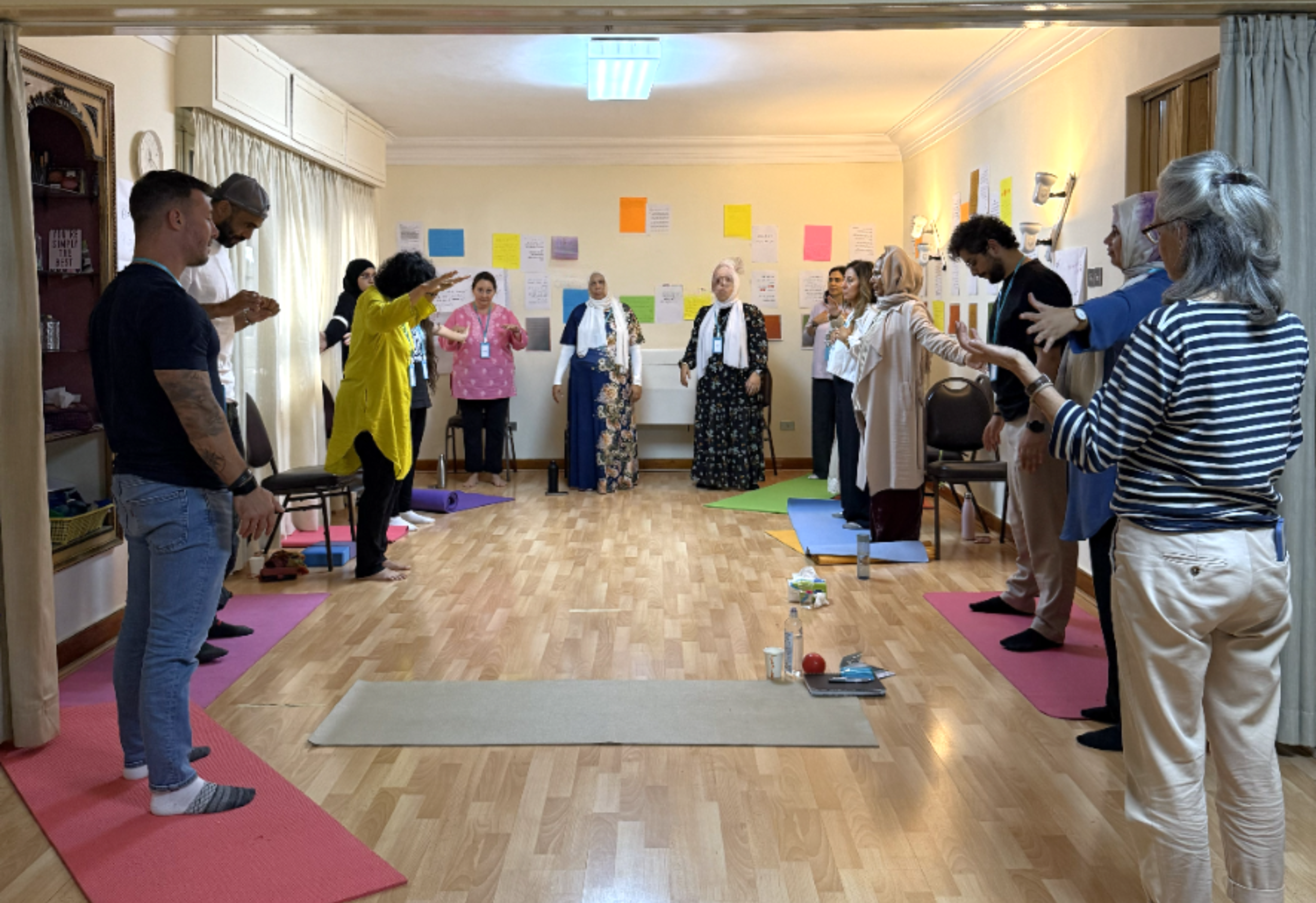
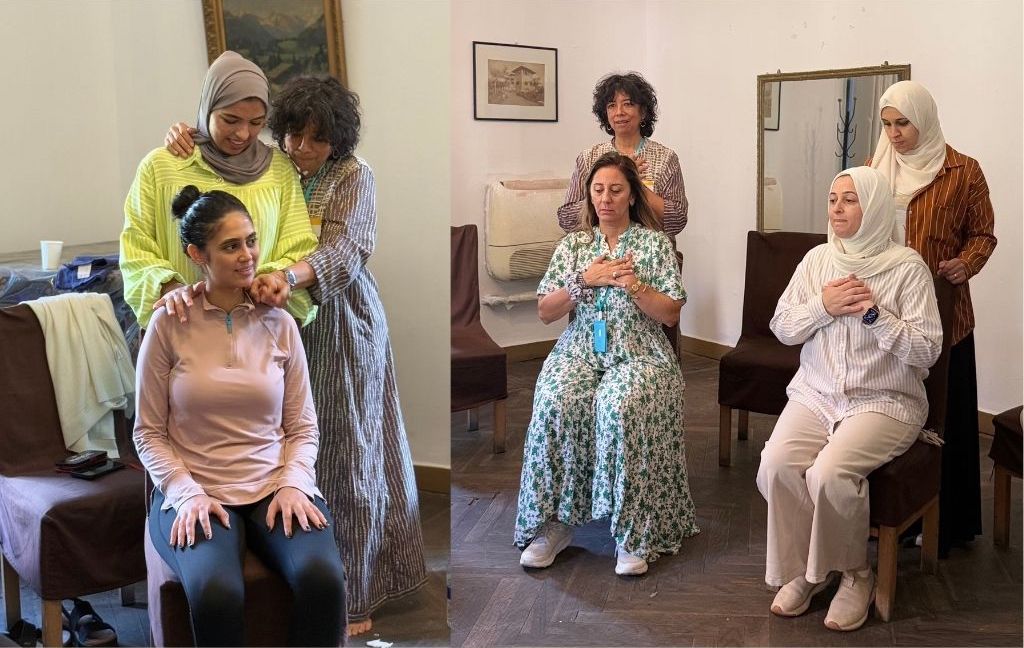
To date, Licia has joined HFG on two of our field missions. She has taught HFG clinicians to integrate bodywork into our therapeutic practices, led team pre-briefs to help our team process our emotions safely, offered bodywork workshops for Palestinian women from Gaza, and helped lead our NGO Frontliner Staff Training. Through her comforting presence, she has reminded us to take things slow, as slow is best in contexts of great pain.
Q: Can you describe your role during the field missions in supporting the clinicians?
Licia: My role on the first mission was to bring an embodied awareness perspective to therapists who primarily had training in talk therapy. I enjoyed training the clinicians. And for people who’ve been trained to just talk, it’s a way to integrate an embodied, attuned way of relating to the people we work with. It gives people permission to slow down and talk less in their therapy sessions. And for therapists who are training to work with people from Gaza, it’s very important that they know how to be comfortable not talking. I want them to be comfortable listening to their own bodies as they listen and track the bodies of the people that they work with. It was really lovely to be with that group of Healing for Gaza therapists.
Q: How have you witnessed working with Palestinians from Gaza navigating displacement, grief, and ongoing violence?
For example, I met a mother with two young children. She was so distraught because she felt that she was falling short by a lot in her care for her children – not able to cook, not able to be with her kids – and that a great burden was falling on her husband. Her voice was very flat, and she was extremely depressed and afraid of feeling her feelings. So I spent a lot of time just grounding what she could feel in her body, gentle movements. And then we did some body work together. I’ve heard from the therapist who was working with her subsequently that she saw a deep improvement in her capacity to engage with her family after that.
Q: Were there moments during the mission when a modality needed to be adapted?
Licia: I led a group session during the first field mission, where I focused on vocalising and toning. It was a large group of diverse individuals, and there was also an interpreter. When I was inviting people to hum together, it triggered feelings of anxiety because it sounded like drones were around them.
I didn’t know that humming with a group of people who’d been exposed to drones buzzing around their homes would be an alarming and distressing experience. So maybe that would be something I do one-on-one rather than with a group. I also found that singing Arabic songs was very comforting for them, so next time I might have people experiment with singing familiar songs to stimulate the relaxed breathing that we were aiming for with the humming. It’s only with great humility that I know that not everything I do will be exactly right for the people I work with, but I’m coming with a spirit of collaborative exploration.
3. On Joy
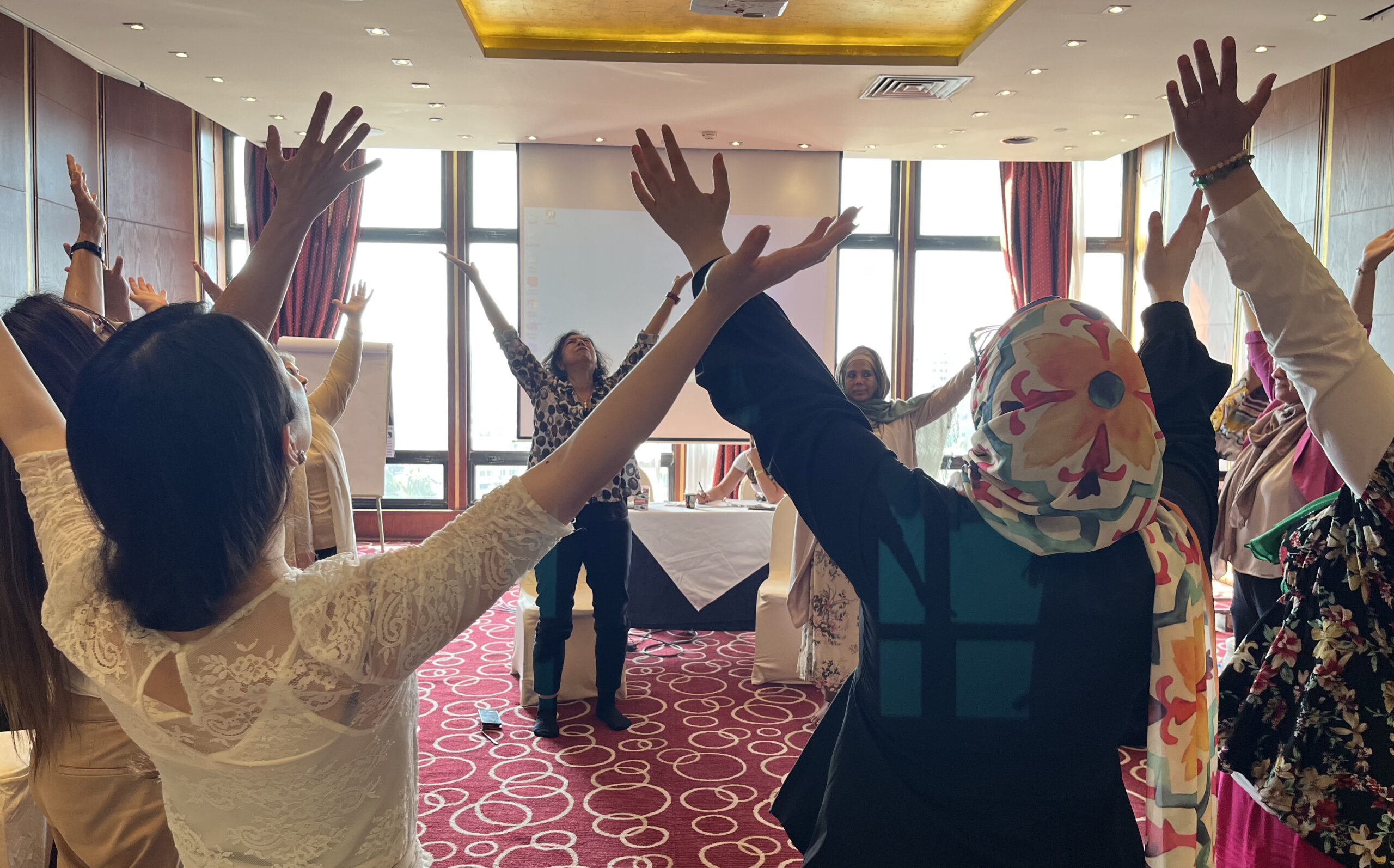
During HFG’s first mission with displaced Palestinian families, Licia observed that a powerful motivator for adults’ openness to healing was the recognition that children could not thrive unless their parents were well. She witnessed how joy often emerged through body-based activities, emphasising that while pain must not be ignored, restoring balance through joy is vital to reclaiming life.
Q: With four decades of experience as an artist, musician, yoga practitioner, and dancer, you bring a uniquely creative lens to your work. How do these creative, joyful disciplines inform your approach to trauma healing?
Licia: They are all body-based ways of expressing joy and the fullness of life. And that’s the thing that people who’ve experienced trauma get most disconnected from. It is important to reconnect with joy after so much pain. I remember when my husband Bessel (Dr. Bessel van der Kolk, author of The Body Keeps the Score), was in South Africa during the end of apartheid, and recalled for me how Bishop Desmond Tutu, after hearing and carrying the weight of sadness across the country, would declare: “It is time to get up and sing!”
Our capacity for joy and love is our human birthright. And when that’s taken away from us, that’s the worst impact of trauma. We have to get to the point where we can trust our bodies to give us an experience other than pain. That in itself is a form of hope, and we need that to keep living.
“That vulnerability to allow yourself to be as undefended as a joyous child is a gift. A lot of the healing comes from taking the risk, taking the risk to feel what we’re afraid we won’t be able to feel again. It’s a very vulnerable state and I do think that that vulnerability is a superpower.“
– Licia Sky
Q: What have you learned from working with Healing for Gaza — about trauma, culture, and mental health care under crisis?
Licia: I’ve learned from Alexandra – she’s a light. I’ve learned from her to model joy even in the face of grief and despair. That vulnerability to allow yourself to be as undefended as a joyous child is a gift. To be able to engage and play with the children in the room, help to bring the adults who were very stiff and quiet into a place where they were able to be more engaged. Our mirror neurons (cells that help the brain mirror what other people are doing or feeling) that open up to each other help us to follow each other and come into sync with each other. People really lit up when she started to play children’s games and sing children’s songs and do very, very playful children’s yoga. That the grown-ups who were doing everything they could to be dignified and composed were able to open up and play with their children. And so a lot of healing comes from taking the risk to feel what we’re afraid we won’t be able to feel again. It’s a very vulnerable state, and I do think that that vulnerability is a superpower. I loved watching Alexandra play.
4. Reflections and Wisdom from Licia
Licia has been a source of inspiration, light, and wisdom to the HFG team and all within our Palestinian community who have had the joy of meeting her. As Healing for Gaza continues to grow and expand its field missions, we hope that future and aspiring trauma workers will carry forward the lessons and skills Licia has shared, bringing them into their own practice to foster even more healing.
Q: What guidance would you offer to clinicians and somatic healers preparing to support our in-person work?
Licia: Having an open and curious mindset is important. If you come in thinking that you know the answers, that you’re going to fix or change someone, you’ll most likely do more harm than good. Being able to listen to what the person is feeling in the moment and helping them to discover what helps them feel better is an empowering process for them. It’s much better than thinking, “I’m the expert coming in from the outside who’s going to help you because you can’t help yourself.” The Palestinian people in our field missions need to find their agency again, need to find their ability to make choices and changes to navigate the world that they’re in now.
“Having an open and curious mindset is important. If you come in thinking that you know the answers, that you’re going to fix or change someone, you’ll most likely do more harm than good.”
– Licia Sky
Q: What do you hope more people understand about the role of somatic work in humanitarian and emergency mental health care?
Licia: Anything that has to do with the body can carry a lot of stigma and shame. When people are trembling, sweating, yawning, shaking, shouting, crying – all those things are things that our bodies need to do to release traumatic stress. But, in most societies, they are shamed into silence; they’re shut down. We let babies cry, but as we age, we do our best to never cry and always look composed. So I hope the stigma around emotional release could be lessened. And that people could understand how important and effective it is to be able to have those physical and emotional releases in order to reestablish balance. If they’re shamed into never feeling like it’s okay to have those feelings, they can’t really get better.
The people I worked with on the first mission remembered and practiced the somatic practices. They made them their own, and shared them with their loved ones. I was particularly moved by a woman who shared breathing and humming practices with her husband. I got to work with him one on one, and he lit up with recognition when I shared things his wife had shared with him.
I hope that people reconnect with a sense of the possibility of their own joy. That it would not be a bad thing after having so much tragedy to still have that capacity to be present and have joy and love in their lives.
Q: Why is supporting Gaza, in particular, so important to you?
Licia: I deeply resonate with the history and plight of the Palestinian people. We usually say the trauma ends at some point, and it’s something you can recover from because the trauma has ended. In Gaza right now, Palestinians are subject to unrelenting trauma. And so all the things that a body does to shut down and protect itself from immediate harm are going on constantly.
But in this moment especially, the invitation to join Healing for Gaza’s field mission is an invitation to be an effective person in helping answer this unspeakable pain and horror. If I’d never been invited, I would feel as though I were just stewing in my helplessness. So it feels like a tremendous gift to be able to be part of helping people who are surviving this. I hope that this knowledge and the practices of healing, this community of healing at HFG, will grow because there are so many people who need it.
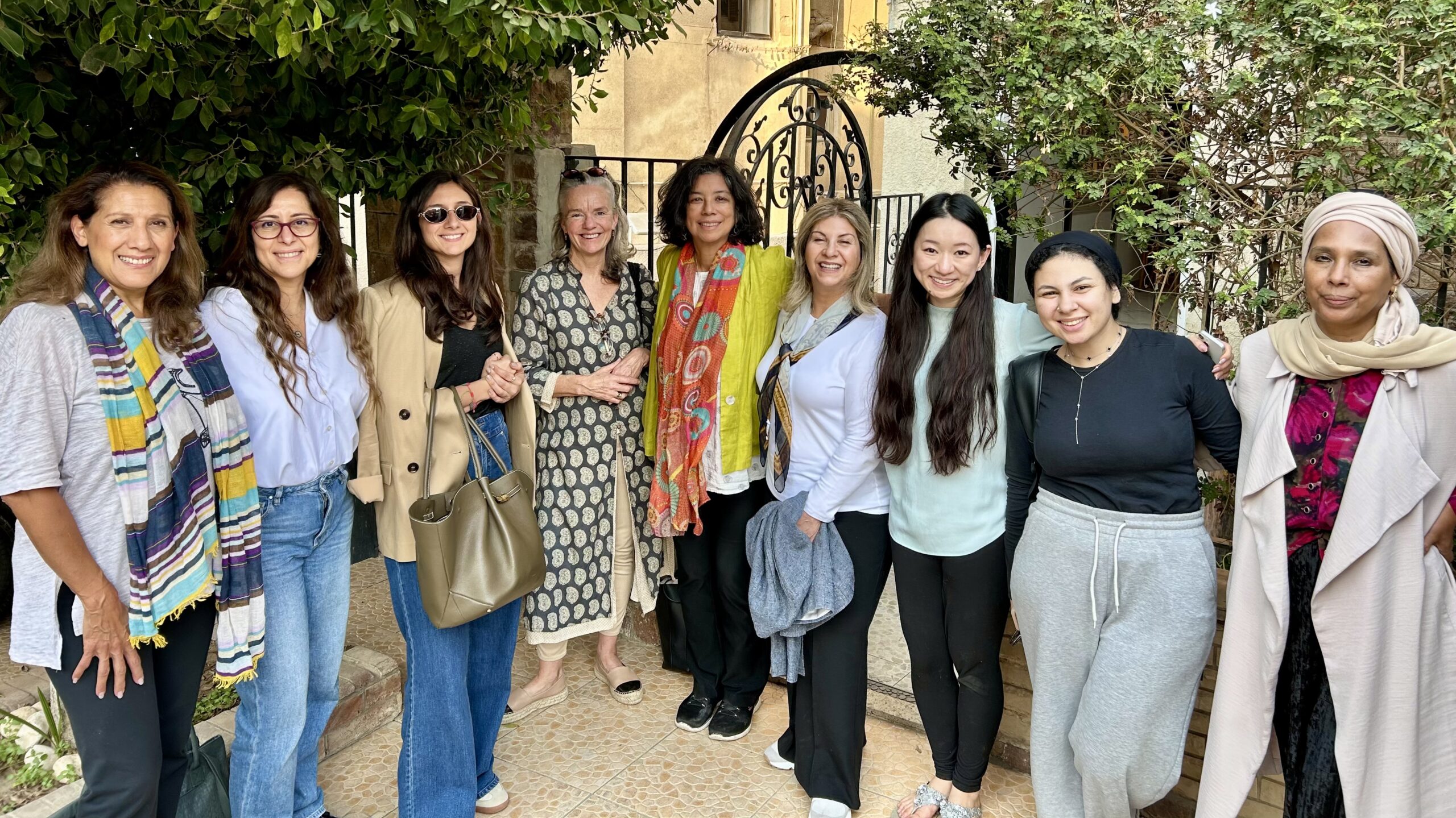
We are deeply grateful for our partnership with Licia Sky and the Trauma Research Foundation. Licia’s insights into the mind and body connection have been invaluable for frontliners, patients, and providers alike. As HFG continues to grow, we look forward to welcoming her on future missions, where she can share even more of her wisdom and healing presence.
_____

Heidi Ho is pursuing degrees in public health and journalism at Northeastern University. She is driven by a passion for social justice, health, and science. She previously worked with a non-profit organization in Ecuador and currently writes for multiple publications. Heidi served as a communications intern with Healing for Gaza.